
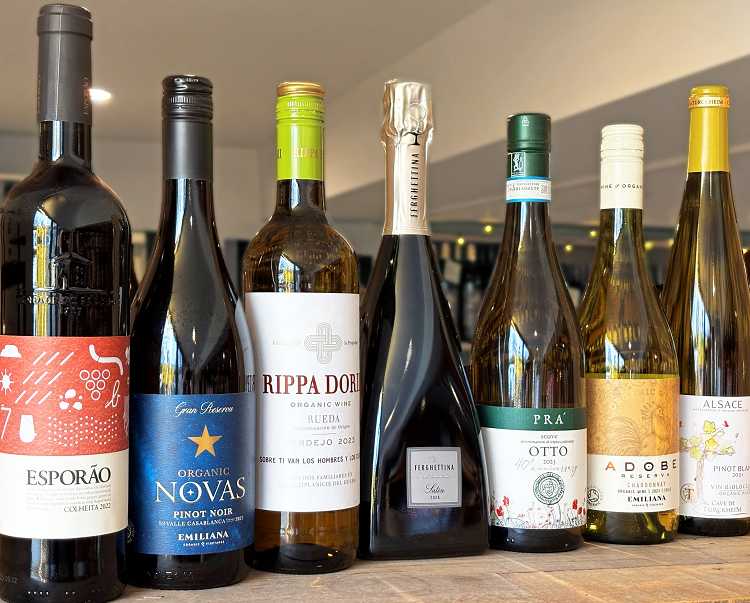
Organic wine has become one of the wine world's biggest talking points over the last few years. More and more customers are looking for organic bottles, often believing they are better for the environment, healthier to drink or simply taste better. Whilst there are certainly benefits to organic viticulture, the reality is a little more nuanced than simply looking for an organic logo on the bottle.
So what does organic actually mean?
In the vineyard, organic farming is all about working with nature rather than against it. Growers avoid synthetic pesticides, herbicides and fertilisers, instead encouraging healthy soils, biodiversity and natural ecosystems. You'll often see cover crops growing between the vines, sheep grazing during the winter months, and growers relying on natural predators rather than chemicals to keep pests under control.
The result is vineyards that are often buzzing with life. Healthy soils encourage deeper root systems, allowing vines to better express the unique characteristics of their site. Many winemakers believe this leads to wines with greater balance, purity and a stronger sense of place.
In the winery, organic regulations continue. The list of permitted additives is much smaller than in conventional winemaking, and sulphur levels are often lower. The aim isn't to interfere with the wine unnecessarily, but to allow the fruit to speak for itself.
But here's the part that often surprises people. Not every grower who farms organically is certified organic.
Achieving official organic accreditation can be a lengthy and expensive process. Vineyards must complete a conversion period, undergo regular inspections and pay annual certification fees. For many small, family-run estates, particularly those producing only a few thousand bottles each year, the cost simply doesn't stack up.
Instead, many choose to spend that money where they feel it makes the biggest difference, in their vineyards, their equipment and their people.
We've visited countless producers over the years who quietly farm using organic principles but have never sought the certification. They're not interested in marketing claims; they're interested in producing the best wines they possibly can while caring for the land that will be farmed by the next generation.
Equally, organic isn't always the right solution everywhere. In some regions, particularly those with challenging weather, growers may occasionally need to intervene to save an entire harvest. A rigid approach doesn't always produce the most sustainable outcome.
That's why, at Hattersley Wines, we don't buy wines simply because they carry an organic badge. We buy from people we trust.
Relationships have always been at the heart of what we do. We spend time with our producers, walk their vineyards, understand their philosophy and see first-hand how they care for their land. Some are certified organic. Some are practising organic. Others follow sustainable or regenerative principles that don't fit neatly into one certification.
For us, the conversation is far more important than the logo. Ultimately, great wine begins in the vineyard. Whether a bottle carries an organic certification or not, we're looking for growers who respect their environment, produce exceptional fruit and make wines with honesty, character and integrity.
Great organic wines to try:


